Stained glass patterns for beginners
A good first stained glass pattern has few pieces, each big enough to hold, cut along straight lines and gentle curves: no deep inside curves, no sharp points, no slivers. A small suncatcher in copper foil of a dozen pieces or fewer makes a good first project. The free patterns below are just that, and each passes every check the Studio runs, at its own size.
01
Few pieces, each one you can hold
Every piece is scored, broken out, ground to fit, wrapped and soldered. The fewer there are, the more care each one gets, and the sooner the first panel is finished. Start with twenty pieces or fewer.
Not too small, either. A piece narrower than 8 mm at any point is hard to hold to the grinder and easy to break, and a long thin one, more than about 8 times as long as it is wide, snaps as it is cut.
02
Lines glass is happy to break along
Glass breaks along a score, and a score runs best in a straight line or a gentle curve from one edge of the glass to the other. Look at every piece of a pattern and ask how it would come out of a sheet.
- Straight lines are the easiest cuts of all, then gentle outside curves, the edge of a circle seen from outside.
- Inside curves are harder: a curve cut into a piece is broken out bit by bit, and one deeper than 40% of its opening runs the break into the piece.
- Sharp points chip: a corner sharper than 15° is hard to cut and harder to grind.
- Big pieces are hard to score and break in one: the Studio warns at 300 mm across in copper foil.
Try it here: draw leads across the panel and read what the Studio's checks say about each piece.
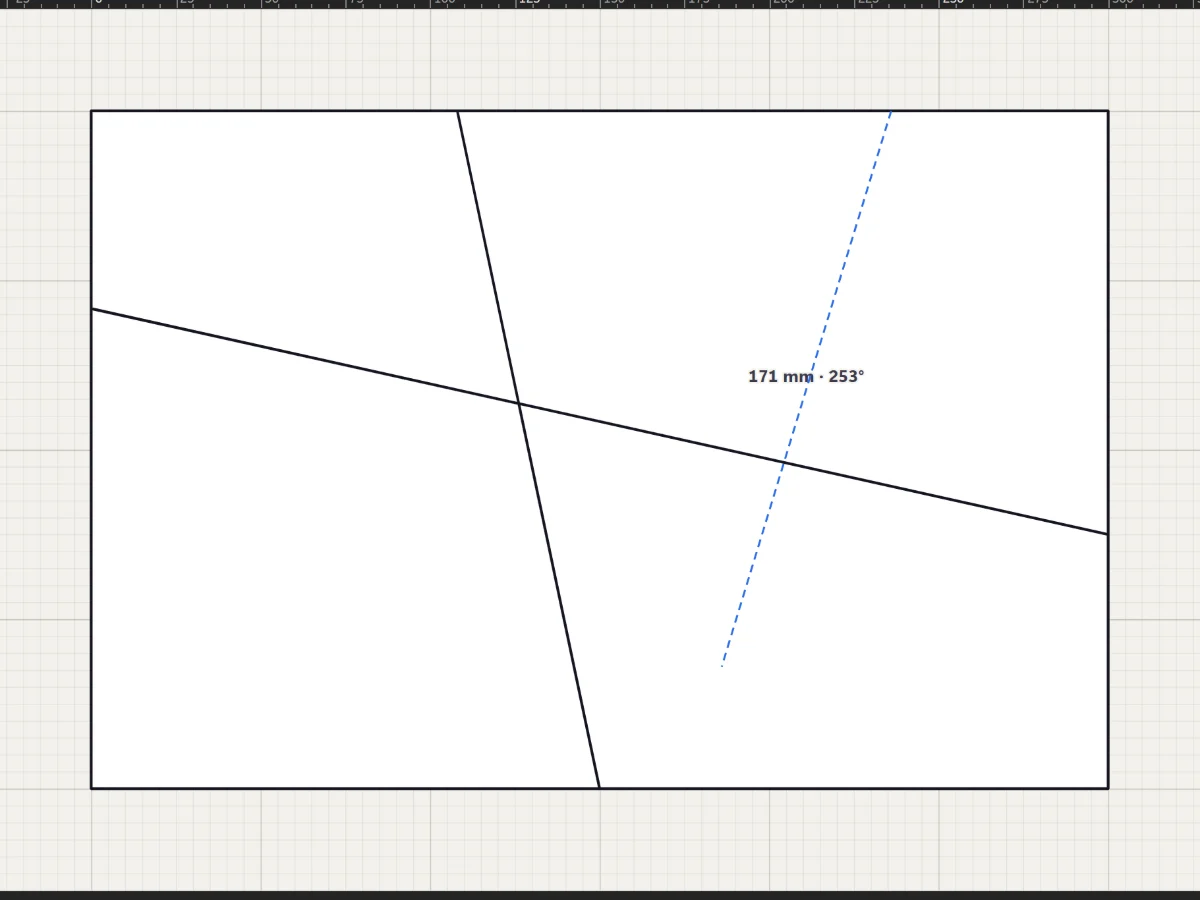
- Cut the field until the warning goes
- Make a sliver and read what it says
03
Copper foil for a first panel
Copper foil is the easier of the two techniques to learn. Each piece is wrapped in copper tape and the seams are soldered, so pieces too small or too curved for lead came are no trouble. Suncatchers, lamps and small panels are made this way.
A foil seam shows about 3.2 mm of solder, so a small panel keeps its detail.
Copper foil
04
Small, with nothing to frame
Keep the first one small, 15 to 30 cm across. It fits on a small work board, needs little glass and is quick to solder.
A suncatcher needs no frame: its outside edge is foiled and soldered like every seam, and a wire loop soldered to the top hangs it in a window.
05
Glass that is kind to cut
Start with smooth glass of an even thickness: a score on a smooth face runs true. Score textured glass on its smooth side.
Glass that runs one way, streaky or reeded, has every piece cut the same way round, and that takes more of the sheet. Save it for the second panel.
06
Free patterns to start with
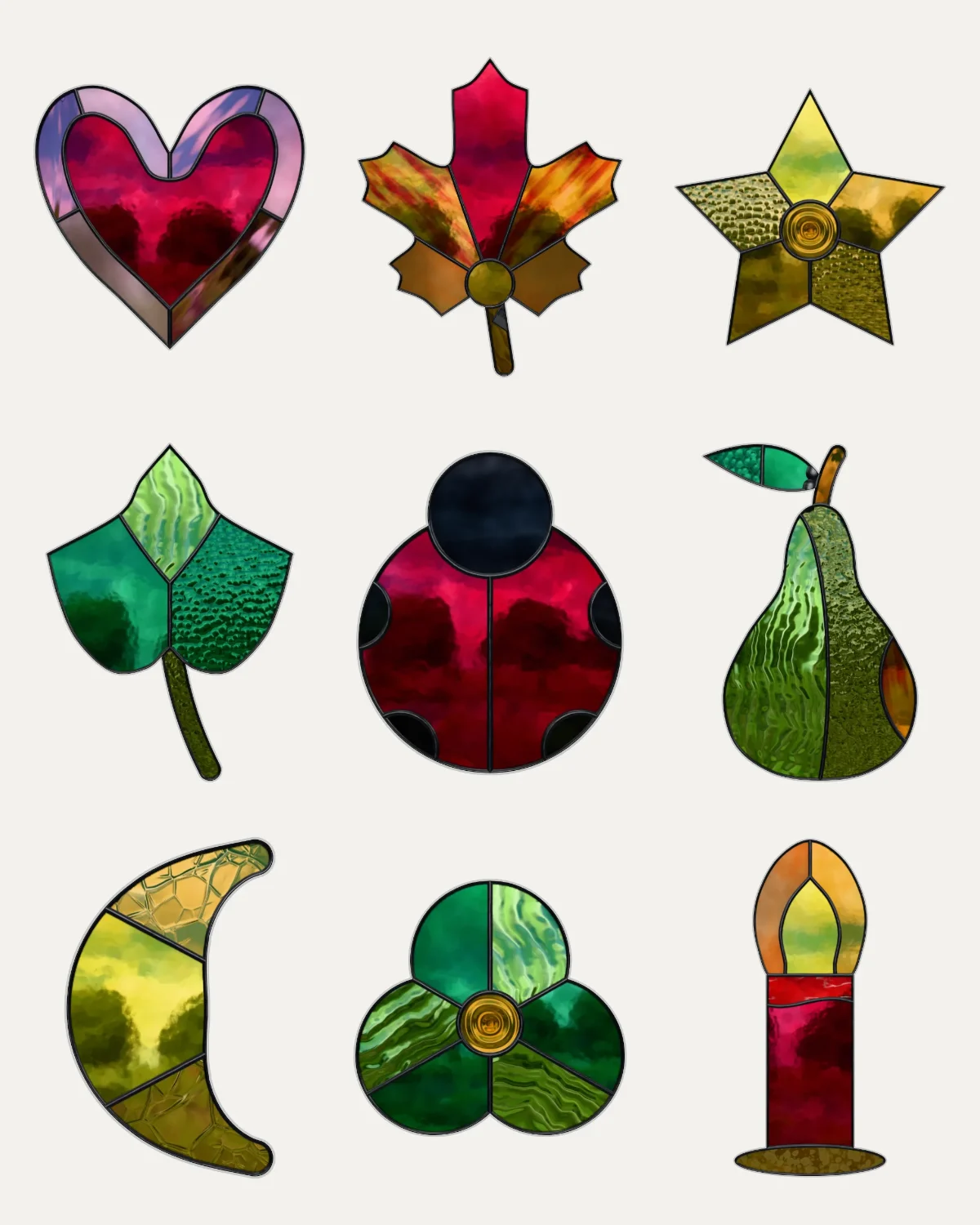
Each of these is a VETRATA file, free in the pattern shop: open it in the Studio, resize it, choose your own glass and print it full size. None has more than eight pieces, and each passes every check at its own size.
-
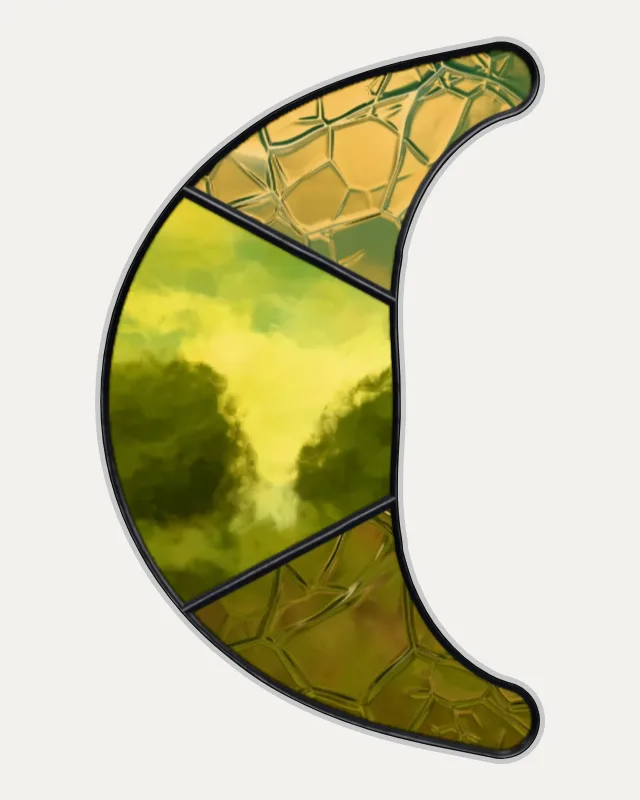 Crescent moon suncatcher
3 pieces · 106 × 173 mm · Free
Crescent moon suncatcher
3 pieces · 106 × 173 mm · Free
-
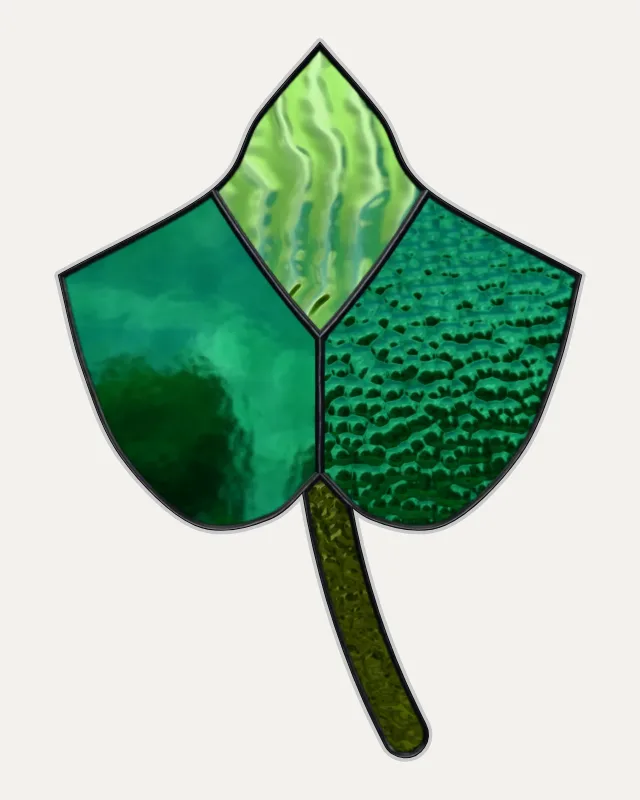 Ivy leaf suncatcher
4 pieces · 184 × 252 mm · Free
Ivy leaf suncatcher
4 pieces · 184 × 252 mm · Free
-
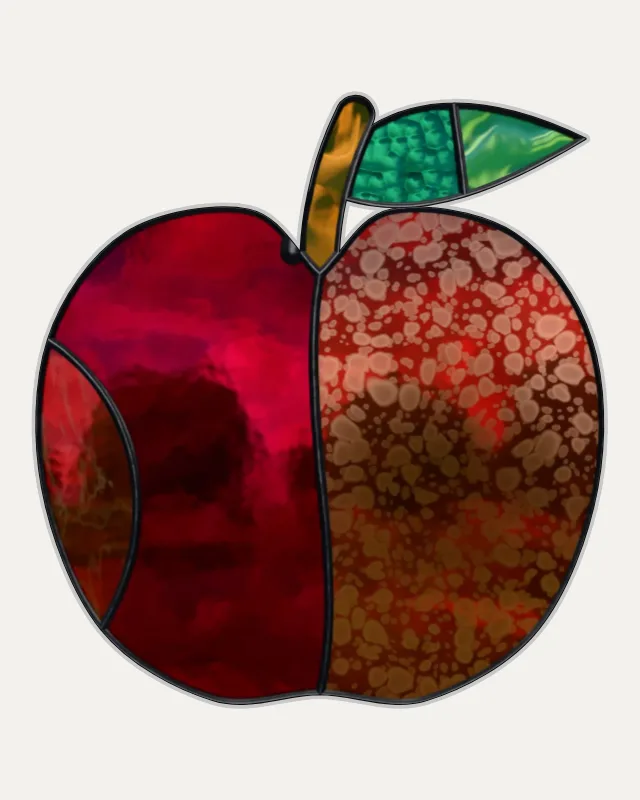 Apple suncatcher
6 pieces · 192 × 206 mm · Free
Apple suncatcher
6 pieces · 192 × 206 mm · Free
-
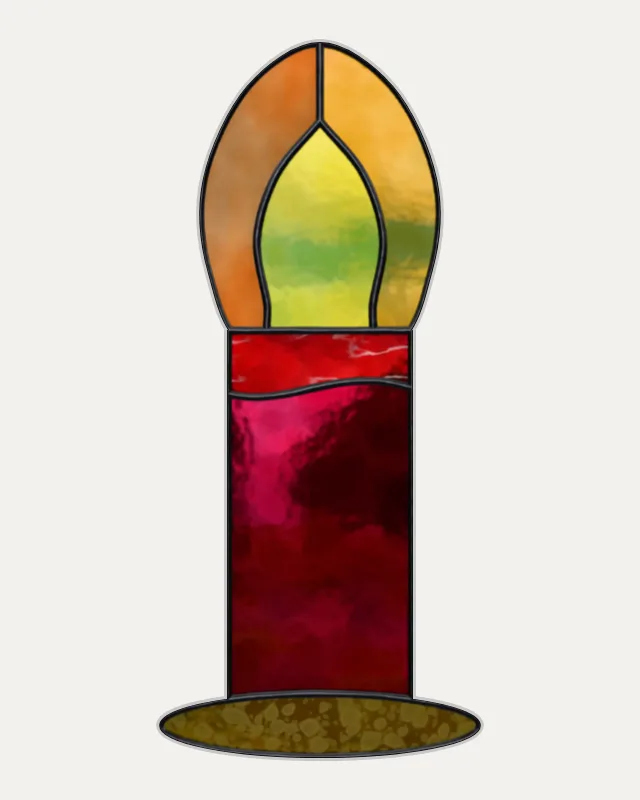 Candle suncatcher
6 pieces · 132 × 293 mm · Free
Candle suncatcher
6 pieces · 132 × 293 mm · Free
-
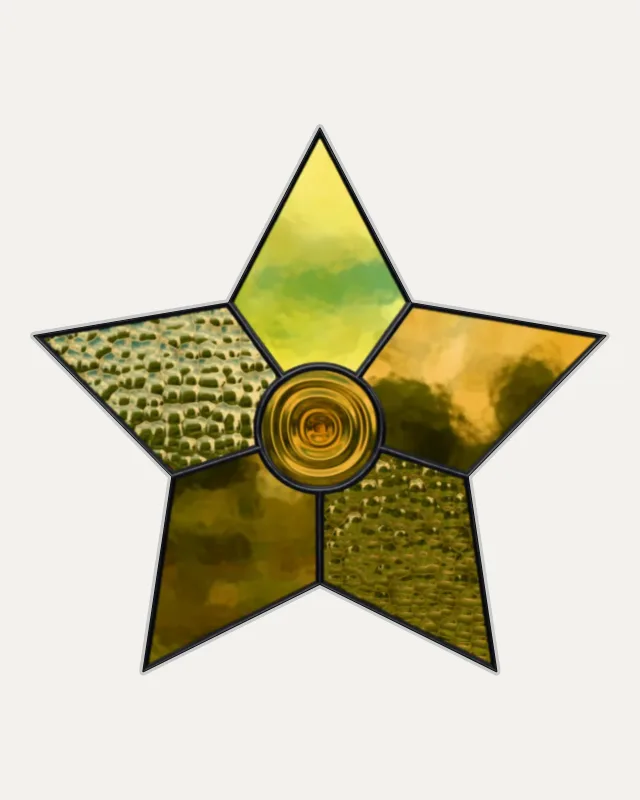 Five-point star suncatcher
6 pieces · 221 × 210 mm · Free
Five-point star suncatcher
6 pieces · 221 × 210 mm · Free
-
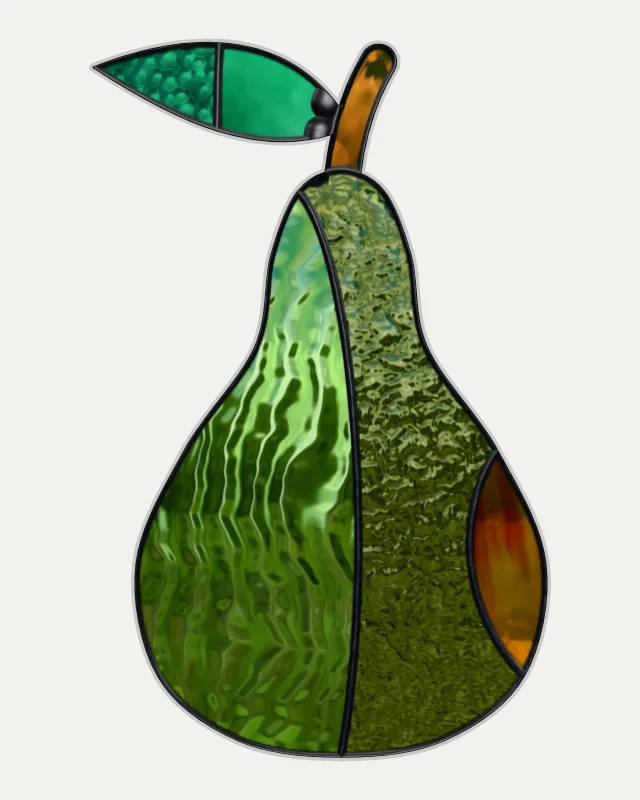 Pear suncatcher
6 pieces · 168 × 265 mm · Free
Pear suncatcher
6 pieces · 168 × 265 mm · Free
-
 Heart suncatcher
7 pieces · 192 × 188 mm · Free
Heart suncatcher
7 pieces · 192 × 188 mm · Free
-
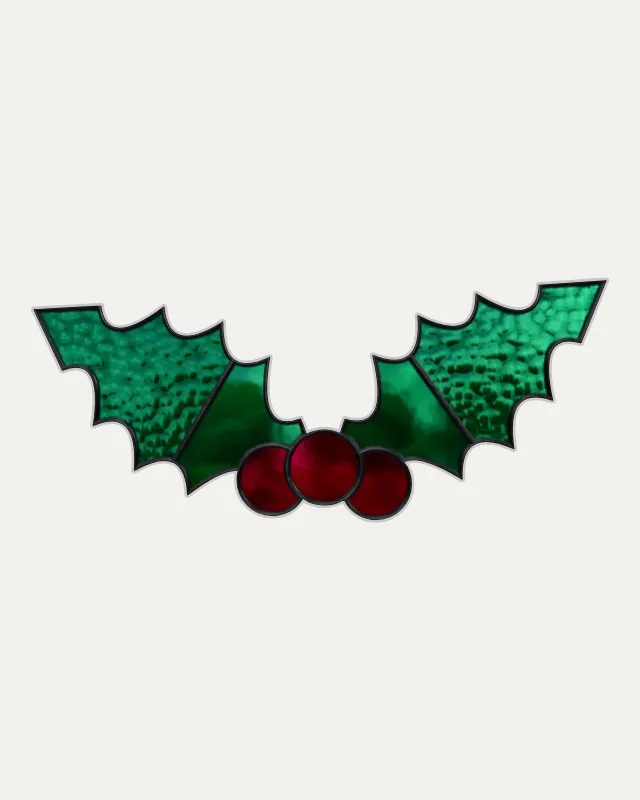 Holly suncatcher
7 pieces · 276 × 115 mm · Free
Holly suncatcher
7 pieces · 276 × 115 mm · Free
-
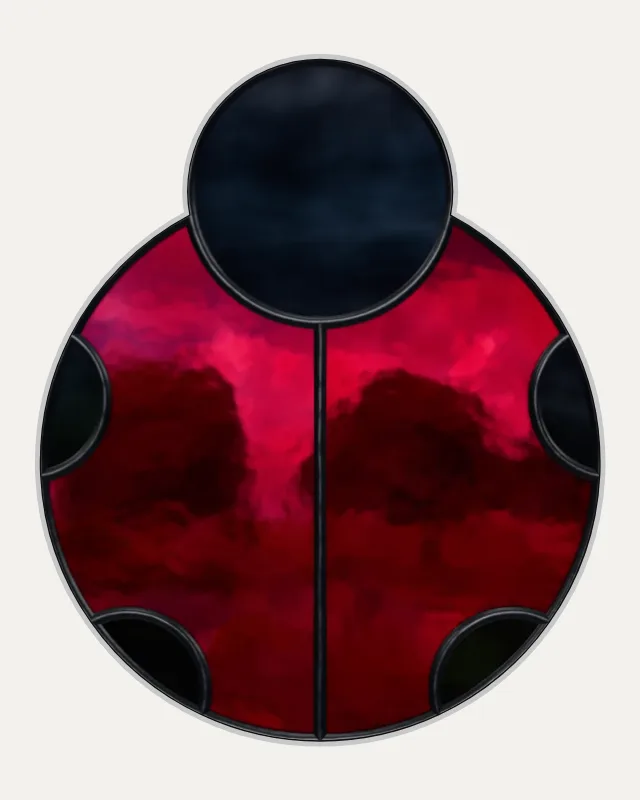 Ladybird suncatcher
7 pieces · 144 × 176 mm · Free
Ladybird suncatcher
7 pieces · 144 × 176 mm · Free
-
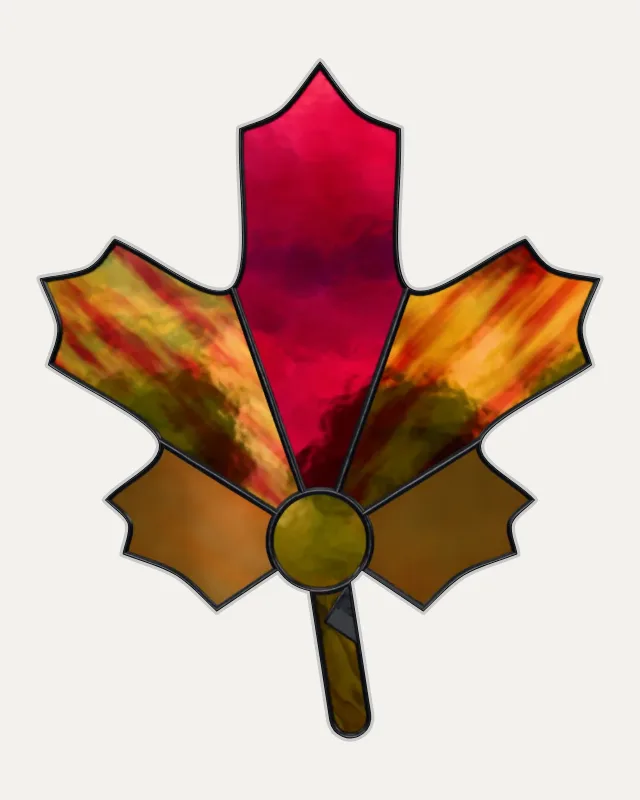 Maple leaf suncatcher
7 pieces · 222 × 268 mm · Free
Maple leaf suncatcher
7 pieces · 222 × 268 mm · Free
-
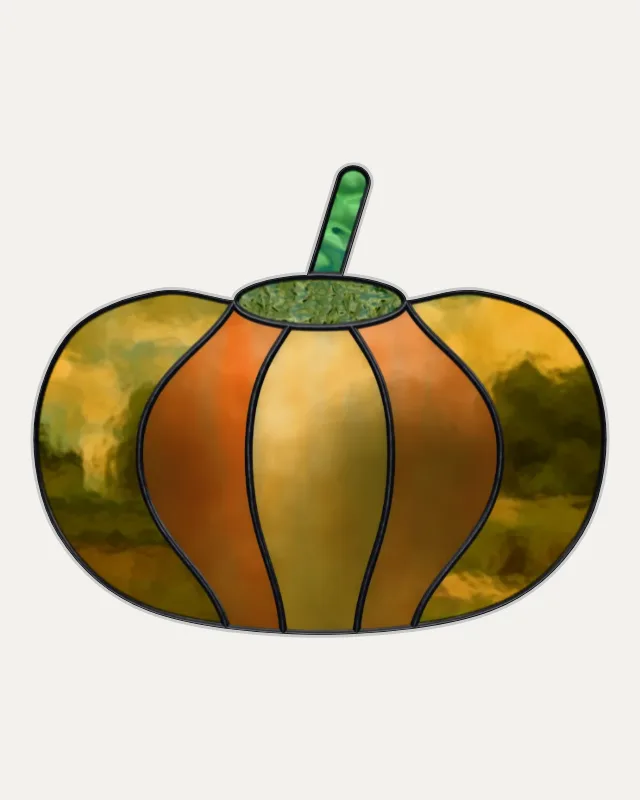 Pumpkin suncatcher
7 pieces · 240 × 197 mm · Free
Pumpkin suncatcher
7 pieces · 240 × 197 mm · Free
-
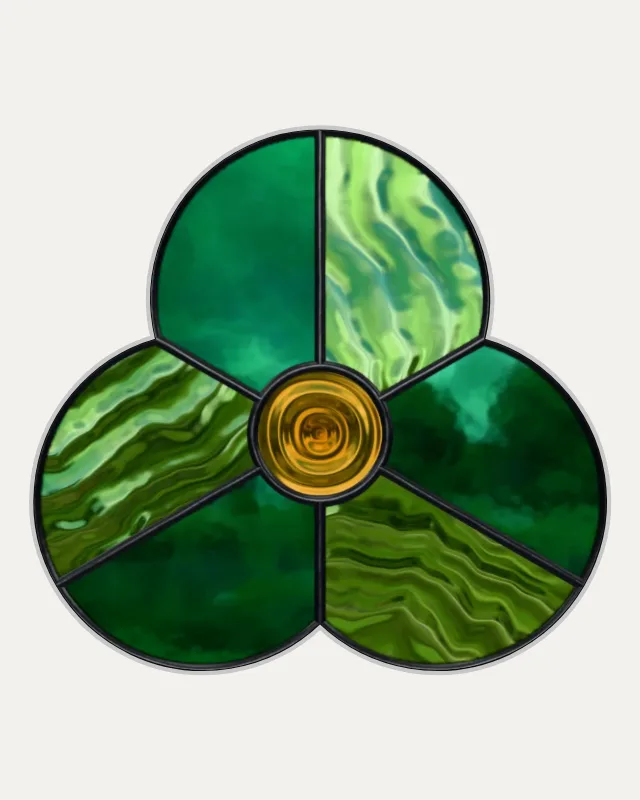 Trefoil suncatcher
7 pieces · 169 × 160 mm · Free
Trefoil suncatcher
7 pieces · 169 × 160 mm · Free
-
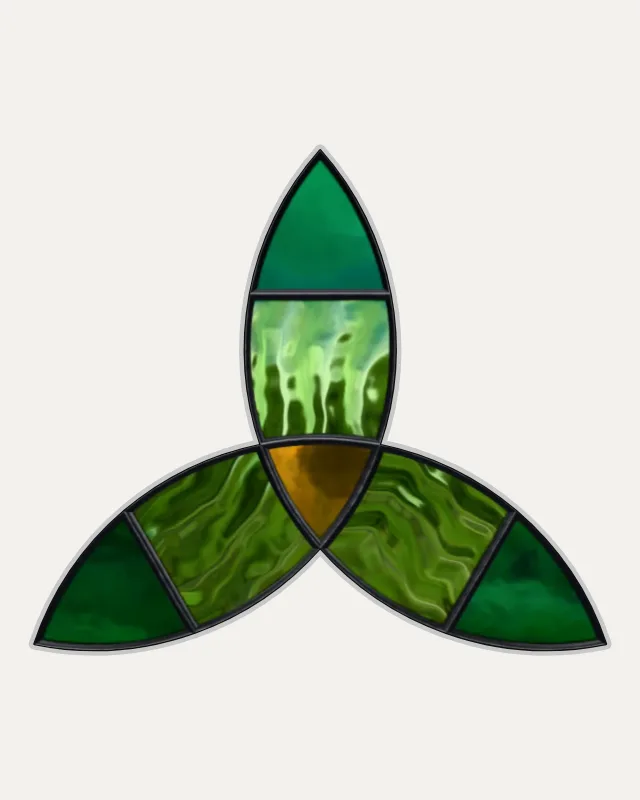 Triquetra suncatcher
7 pieces · 159 × 140 mm · Free
Triquetra suncatcher
7 pieces · 159 × 140 mm · Free
-
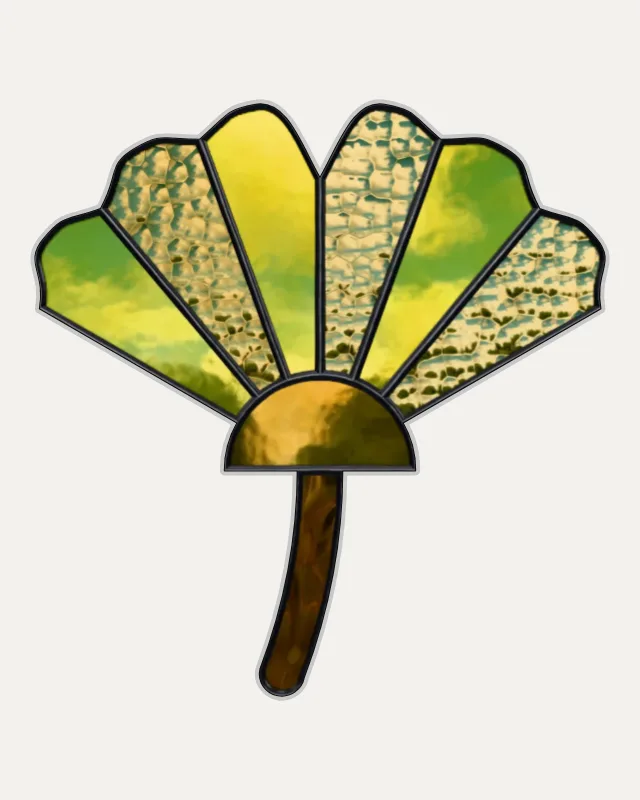 Ginkgo leaf suncatcher
8 pieces · 180 × 186 mm · Free
Ginkgo leaf suncatcher
8 pieces · 180 × 186 mm · Free
07
Check any pattern before you cut
A pattern from a book or a shop can be checked the same way. Draw it in the Studio, or import it as SVG or DXF, and Can I cut this? lists every piece the glass won't take at the size you will build it, with a fix beside each finding: a lead across a deep curve, a split for a piece too big.
A pattern that passes at one size can fail at another. Shrink it and its narrow pieces get narrower, so check it again at the size you print.
In VETRATA Studio
Do it in the Studio, one lesson at a time.
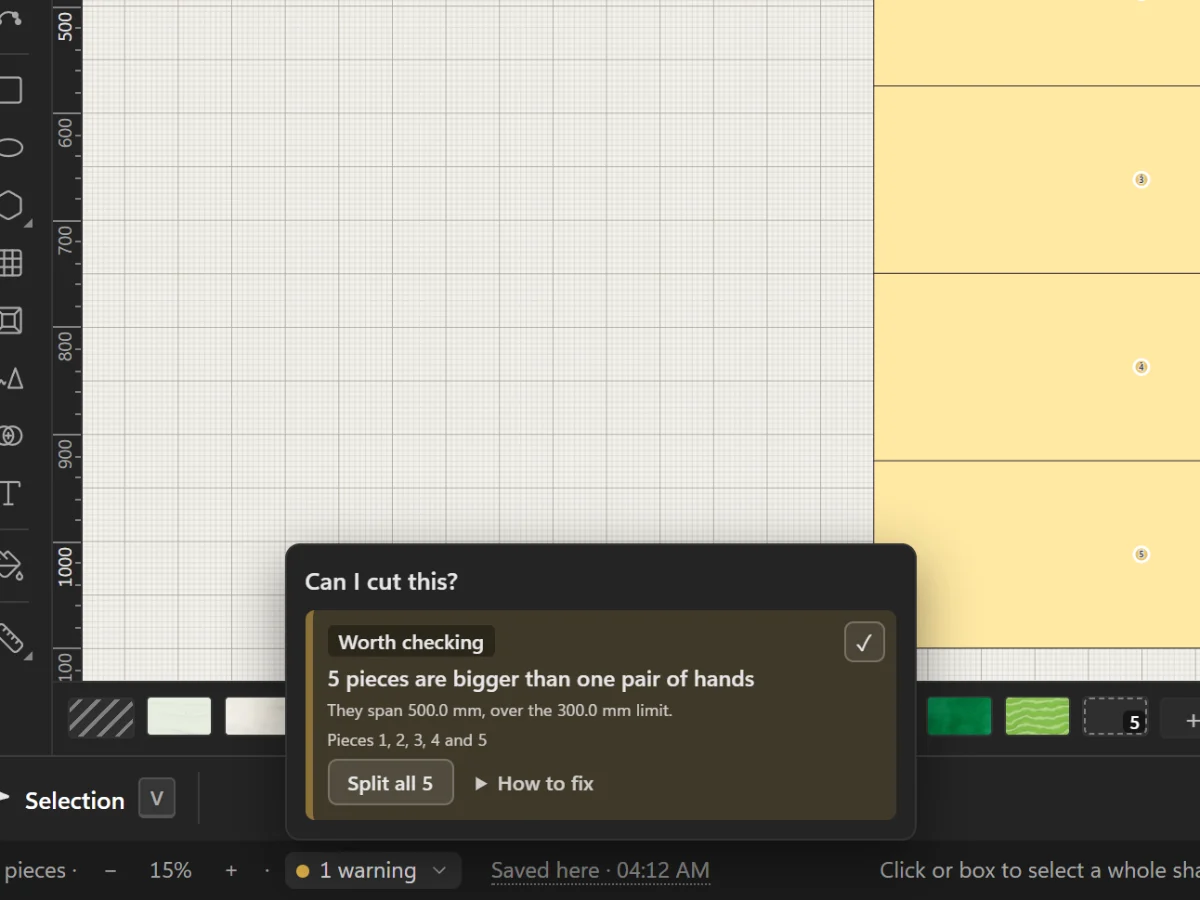 Lesson 12 · Draw
Check that the glass can be cut
Read the Studio's warnings about pieces glass won't take, and fix them with the button beside each one.
4 steps · 2 min · Try it in the page
Lesson 12 · Draw
Check that the glass can be cut
Read the Studio's warnings about pieces glass won't take, and fix them with the button beside each one.
4 steps · 2 min · Try it in the page
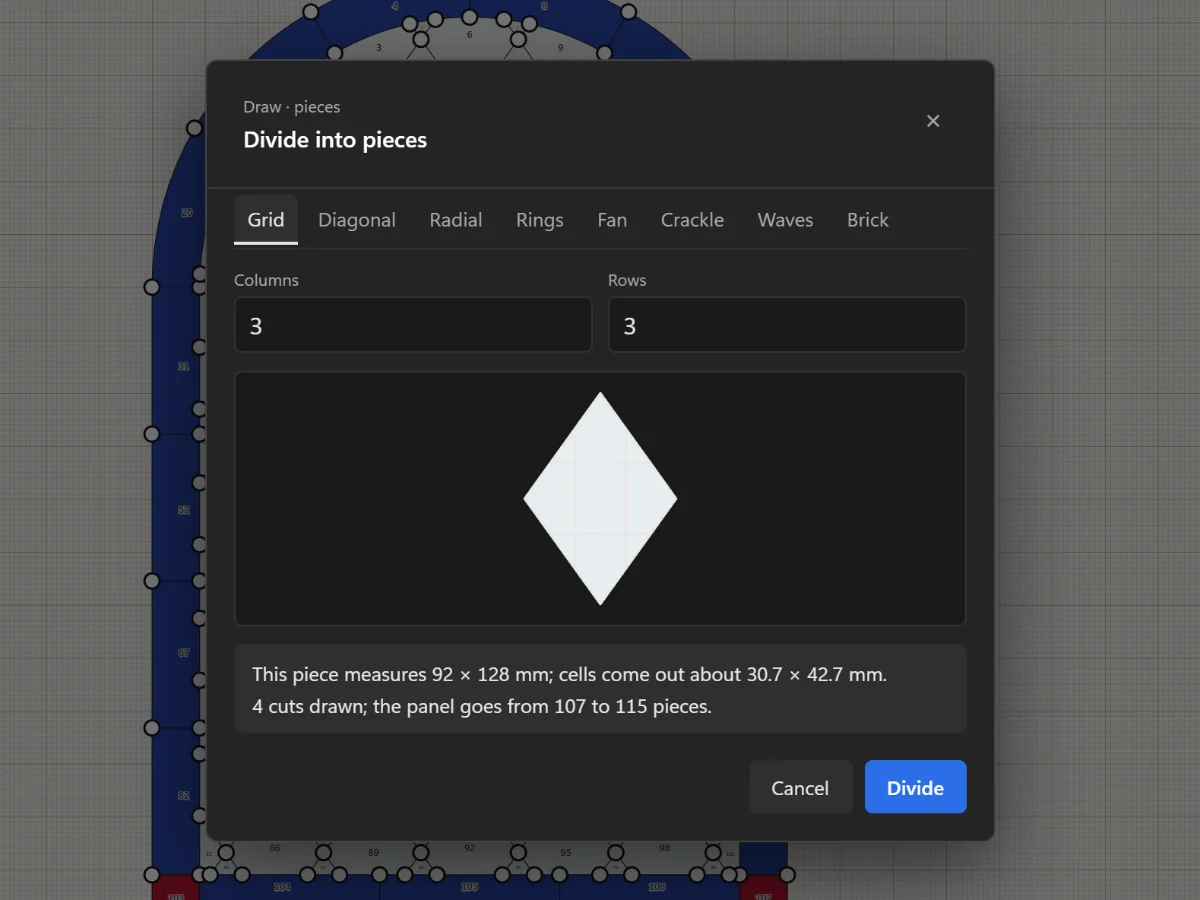 Lesson 8 · Draw
Split, cut and join pieces
Add joints, remove leads, cut with the Knife, divide a piece evenly and join pieces with the Shape Builder.
5 steps · 2 min · Try it in the page
Lesson 8 · Draw
Split, cut and join pieces
Add joints, remove leads, cut with the Knife, divide a piece evenly and join pieces with the Shape Builder.
5 steps · 2 min · Try it in the page
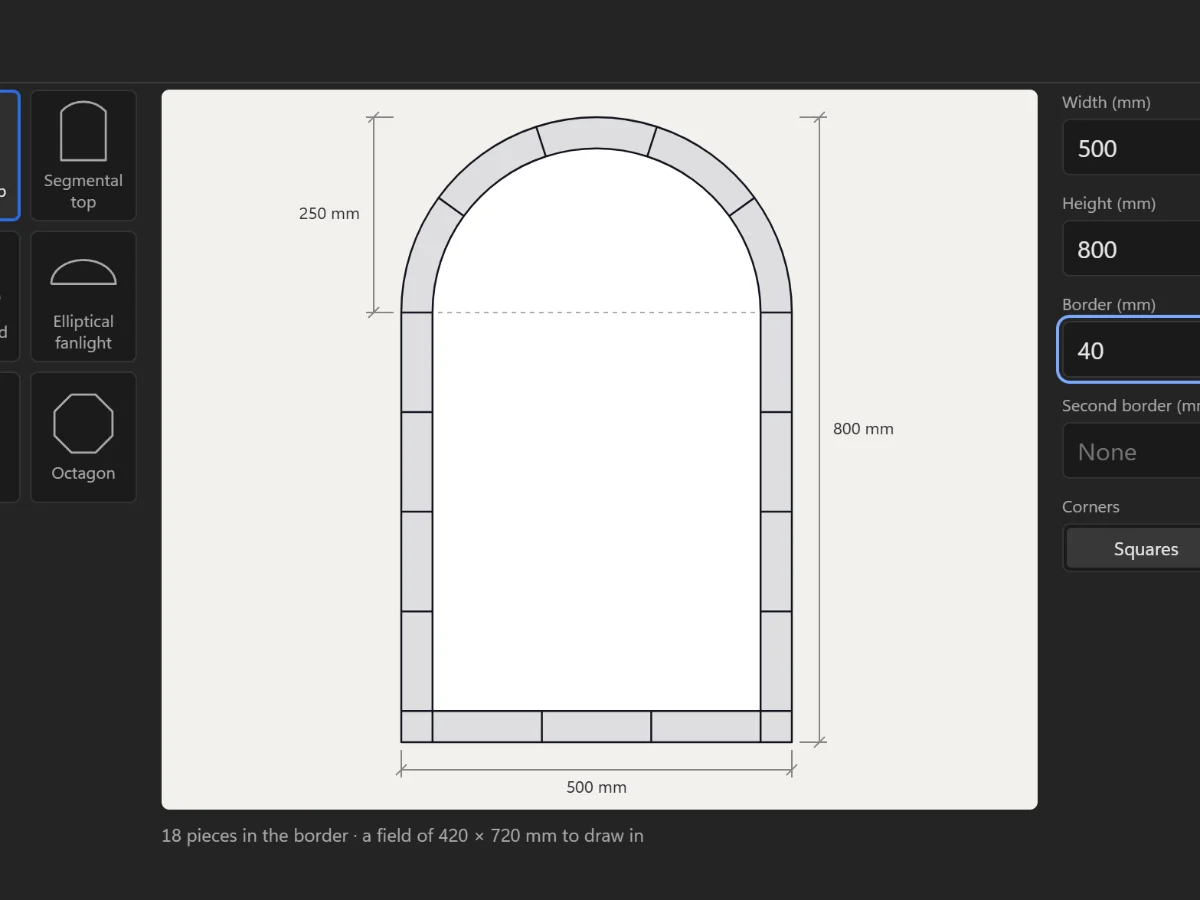 Lesson 2 · Getting started
Start a new panel
Choose the opening's shape and size, add a border, and set the technique you will build it in.
6 steps · 2 min
Lesson 2 · Getting started
Start a new panel
Choose the opening's shape and size, add a border, and set the technique you will build it in.
6 steps · 2 min
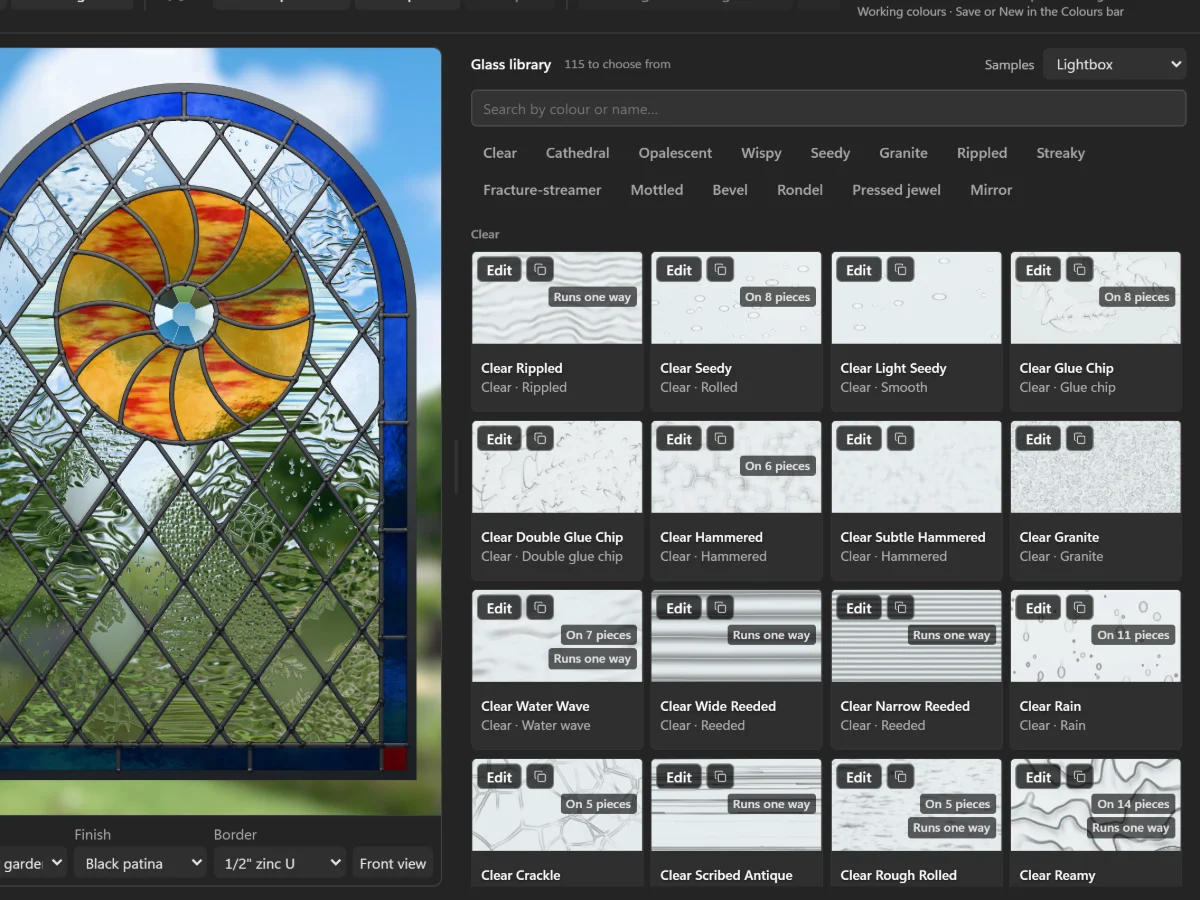 Lesson 15 · Glass
Choose from the glass library
Over a hundred glasses, from clear textures to streaky, fracture-streamer and pressed jewels, seen in light.
5 steps · 2 min
Lesson 15 · Glass
Choose from the glass library
Over a hundred glasses, from clear textures to streaky, fracture-streamer and pressed jewels, seen in light.
5 steps · 2 min
More guides
The rest of the craft.
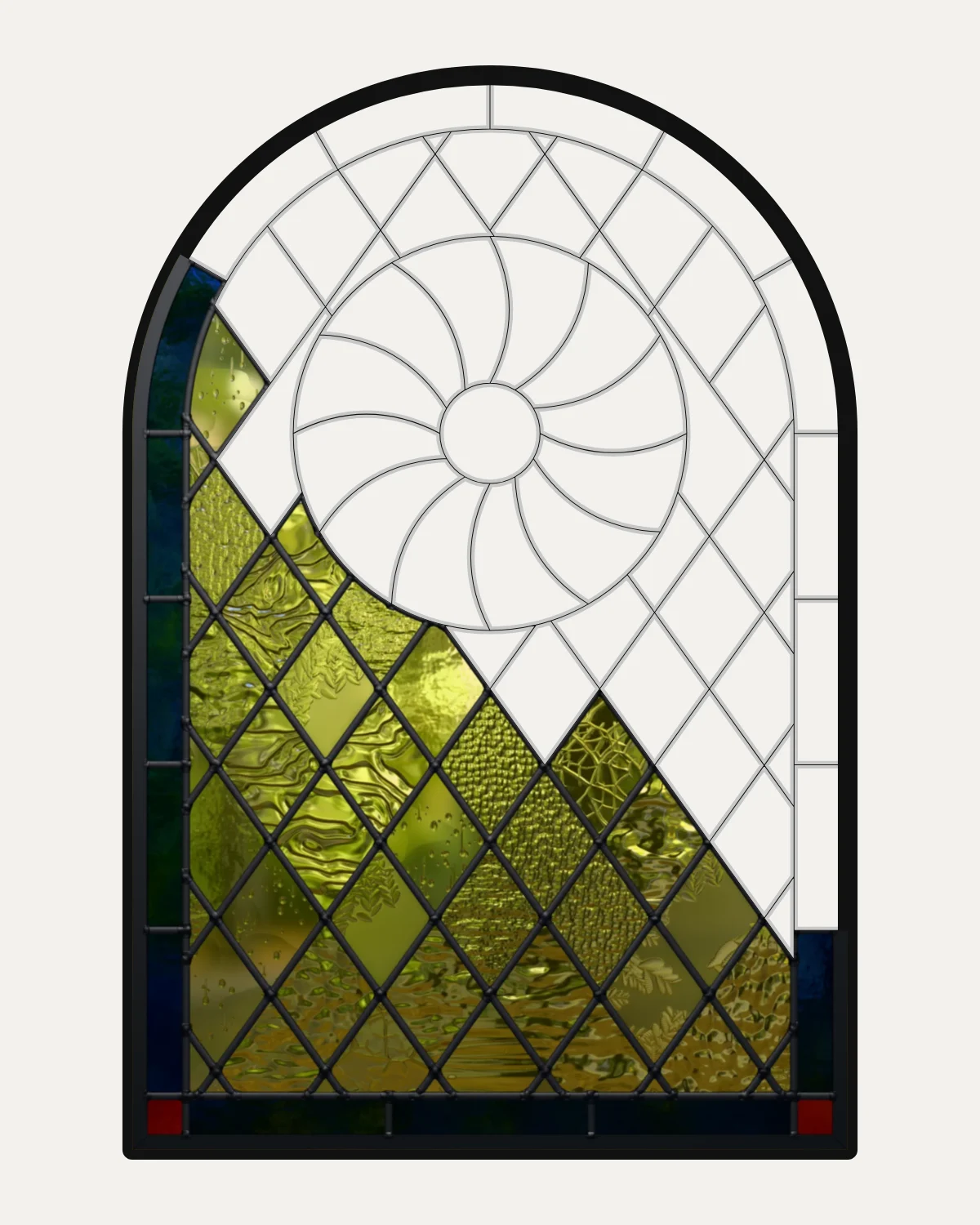 Guide · 5 min read
How to make a stained glass pattern
Make a stained glass pattern step by step: measure the opening, choose came or foil, draw lines glass can be cut along, number the pieces, choose the glass and print it full size.
Guide · 5 min read
How to make a stained glass pattern
Make a stained glass pattern step by step: measure the opening, choose came or foil, draw lines glass can be cut along, number the pieces, choose the glass and print it full size.
 Guide · 5 min read
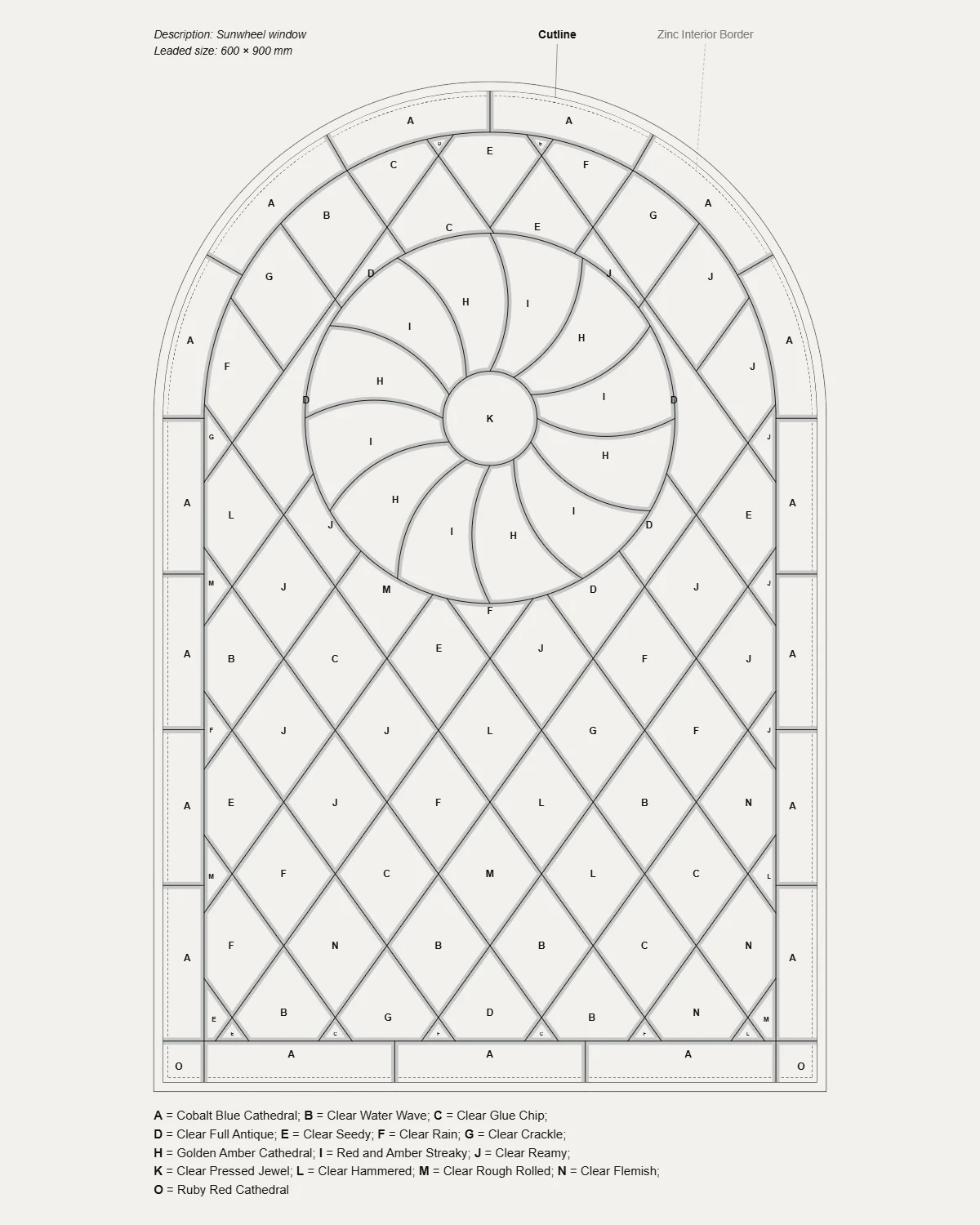
How to read a stained glass pattern
What every mark on a stained glass pattern means: the plan and the cutting pattern, lead lines and cut lines, piece numbers, glass letters and the key, grain arrows, the leaded size and the marks that join printed sheets.
Guide · 5 min read
How to read a stained glass pattern
What every mark on a stained glass pattern means: the plan and the cutting pattern, lead lines and cut lines, piece numbers, glass letters and the key, grain arrows, the leaded size and the marks that join printed sheets.
 Guide · 4 min read
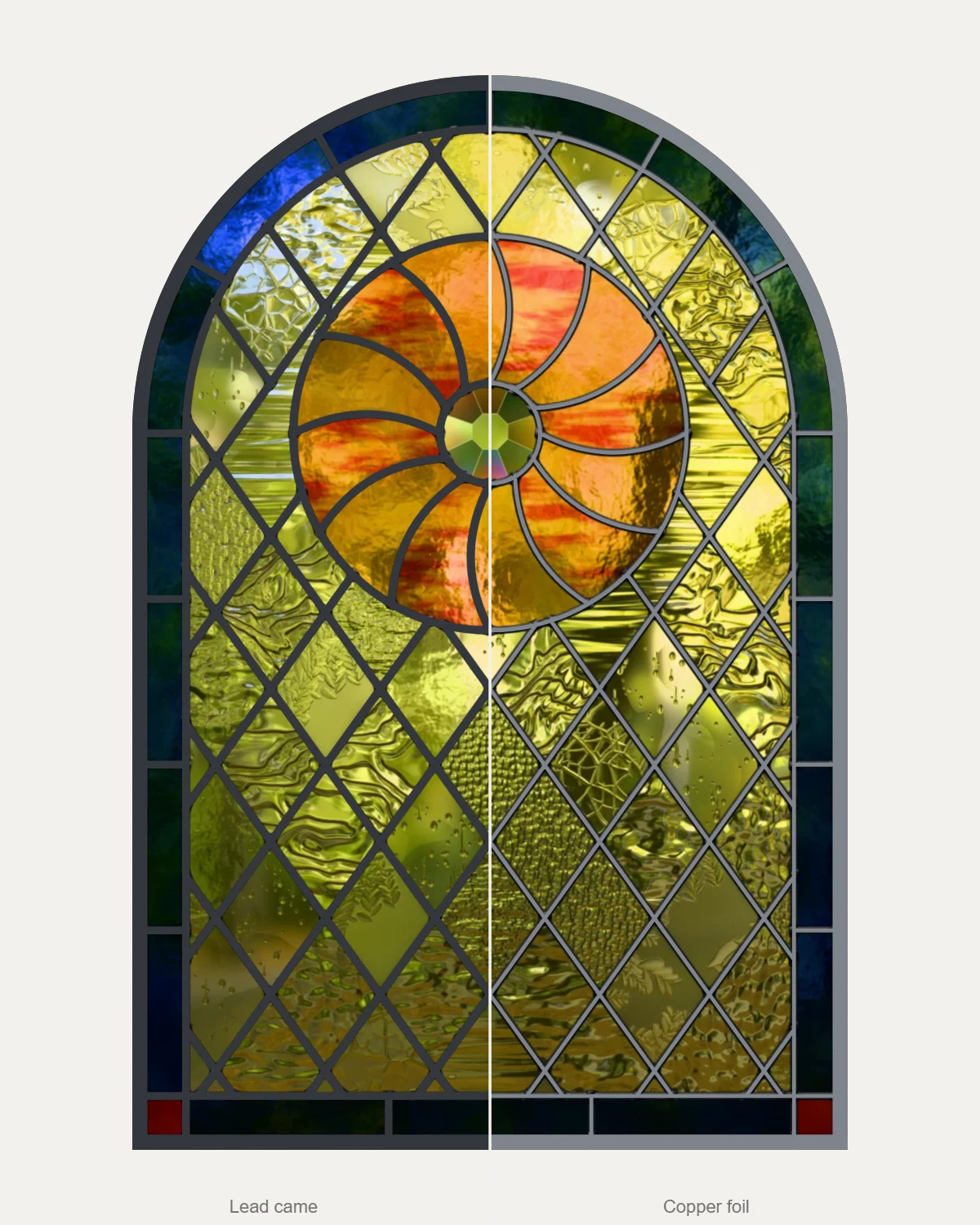
Lead came or copper foil?
Lead came or copper foil: what each is, what each suits, and how the choice changes a stained glass pattern: the width of its lines, where the glass is cut and how big a piece can be.
Guide · 4 min read
Lead came or copper foil?
Lead came or copper foil: what each is, what each suits, and how the choice changes a stained glass pattern: the width of its lines, where the glass is cut and how big a piece can be.
 Guide · 3 min read
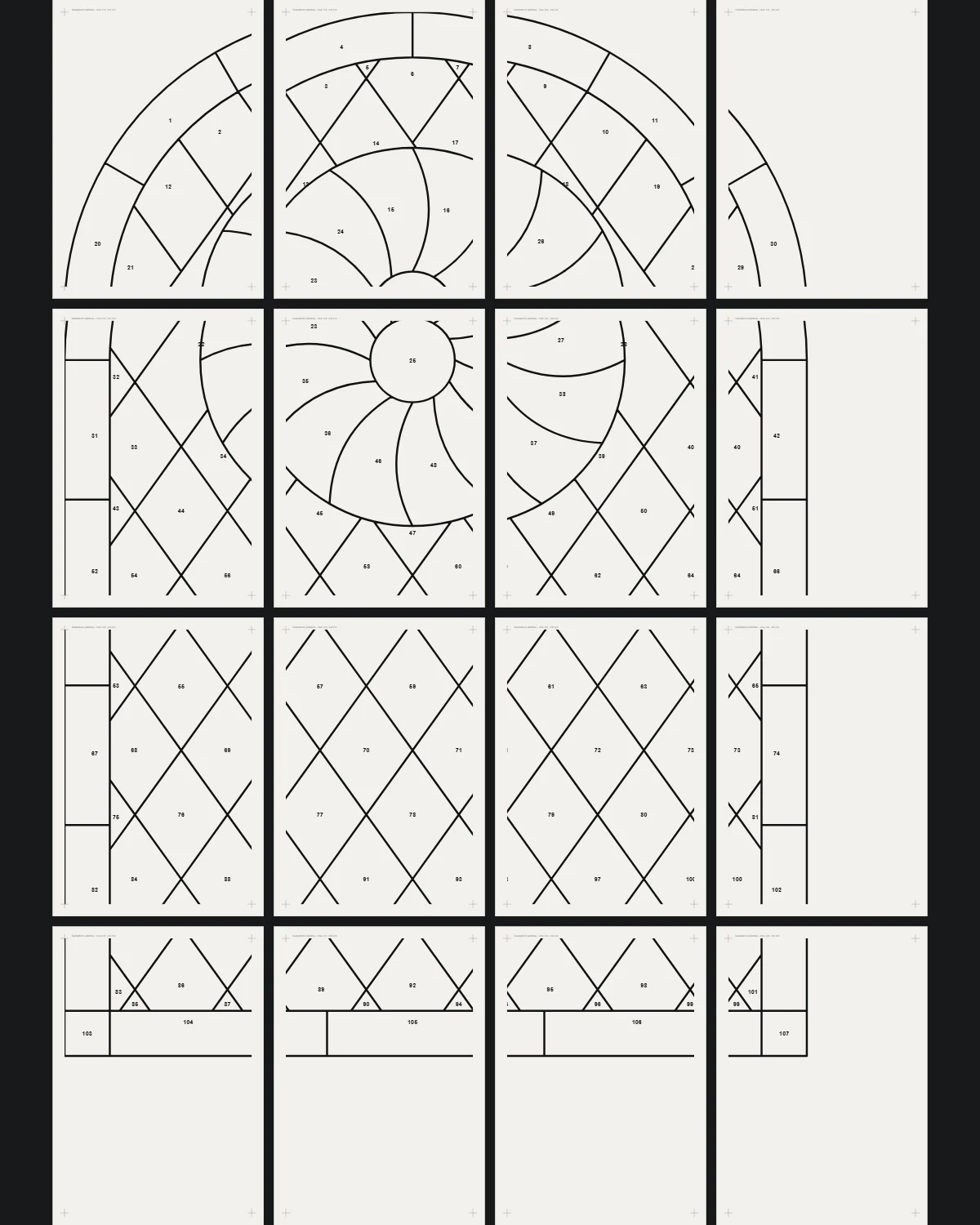
How to resize a stained glass pattern and print it full size
Enlarge or shrink a stained glass pattern to fit your window without fattening its lines, check every piece can still be cut, and print it full size on A4 or Letter, true to scale.
Guide · 3 min read
How to resize a stained glass pattern and print it full size
Enlarge or shrink a stained glass pattern to fit your window without fattening its lines, check every piece can still be cut, and print it full size on A4 or Letter, true to scale.
 Guide · 3 min read
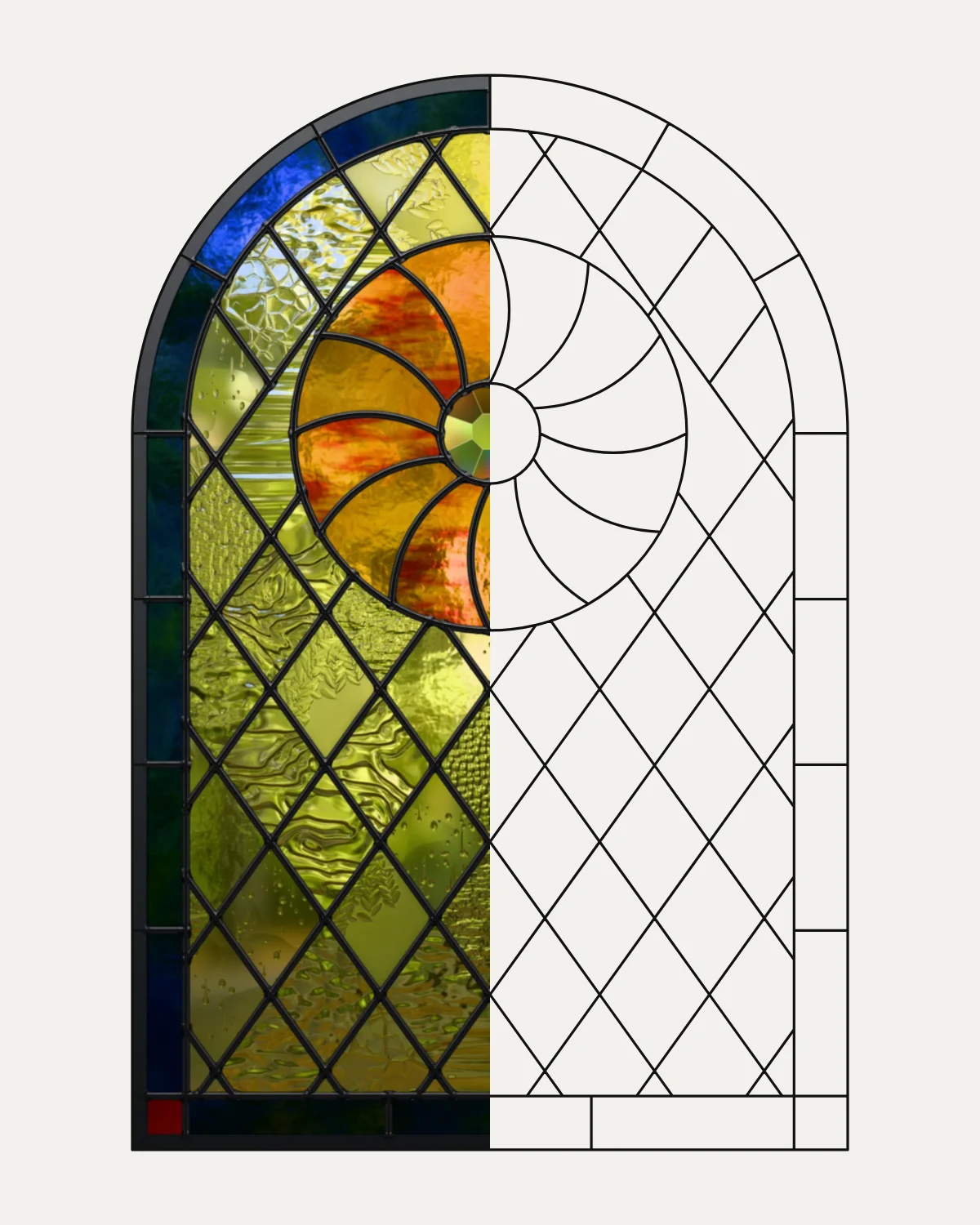
How to turn a photo into a stained glass pattern
Turn a photo into a stained glass pattern by tracing it: choose a photo with strong shapes, put it under the pattern at full size, draw the big shapes as leads, add the lines the glass needs and check every piece can be cut.
Guide · 3 min read
How to turn a photo into a stained glass pattern
Turn a photo into a stained glass pattern by tracing it: choose a photo with strong shapes, put it under the pattern at full size, draw the big shapes as leads, add the lines the glass needs and check every piece can be cut.